
Six Senses Kyoto: We Skipped Gion and Stayed In Bed
Not the traditional Kyoto you'd expect and what's exactly why I loved it.
by KA's Experience Team
November through June
Best months to visit
August through January
Best time to book
November through June
Best months to visit
August through January
Best time to book
Reminder Set!
We'll notify you when it's the best time to book this destination.
Get reminded when it's time to book
This is my honest, first-hand review of Six Senses Kyoto, where I had the privilege of staying for two nights in early March 2026. This is not traditional Japan with tatami mats and kaiseki in your room. It is, however, a modern Japanese fusion with Heian history, biohacking, delicious and deeply nourishing breakfast, and a spa you’ll dream about long after you leave. I deem it essential for anyone who appreciates intentional details and needs permission to pause.
We Handle Everything. You Just Show Up.
No research. No coordination. No backup plans needed. Just your perfect journey—guaranteed.
Create Your JourneyIt was our last morning at Six Senses Kyoto and I didn’t want to leave the bed.
Not because I was tired. I wasn’t. I’d slept better than I had in months, YEARS, maybe. And I think it was because for the first time in who knows how long, I gave myself permission to stop. I wasn’t planning the next temple, the next meal, the next thing we had to see before we left Japan. I sat up slowly and slid my feet into cozy brown slippers. I made myself some coffee and grabbed a tasty in-house made sansho pepper chocolate chip cookie. I walked out onto the balcony of our room, sipping, nibbling, and watching the soft morning light glisten on the moss in the garden.
And in that moment, I thought: Wow! How did I not realize I was so exhausted?
Let me back up for a second…
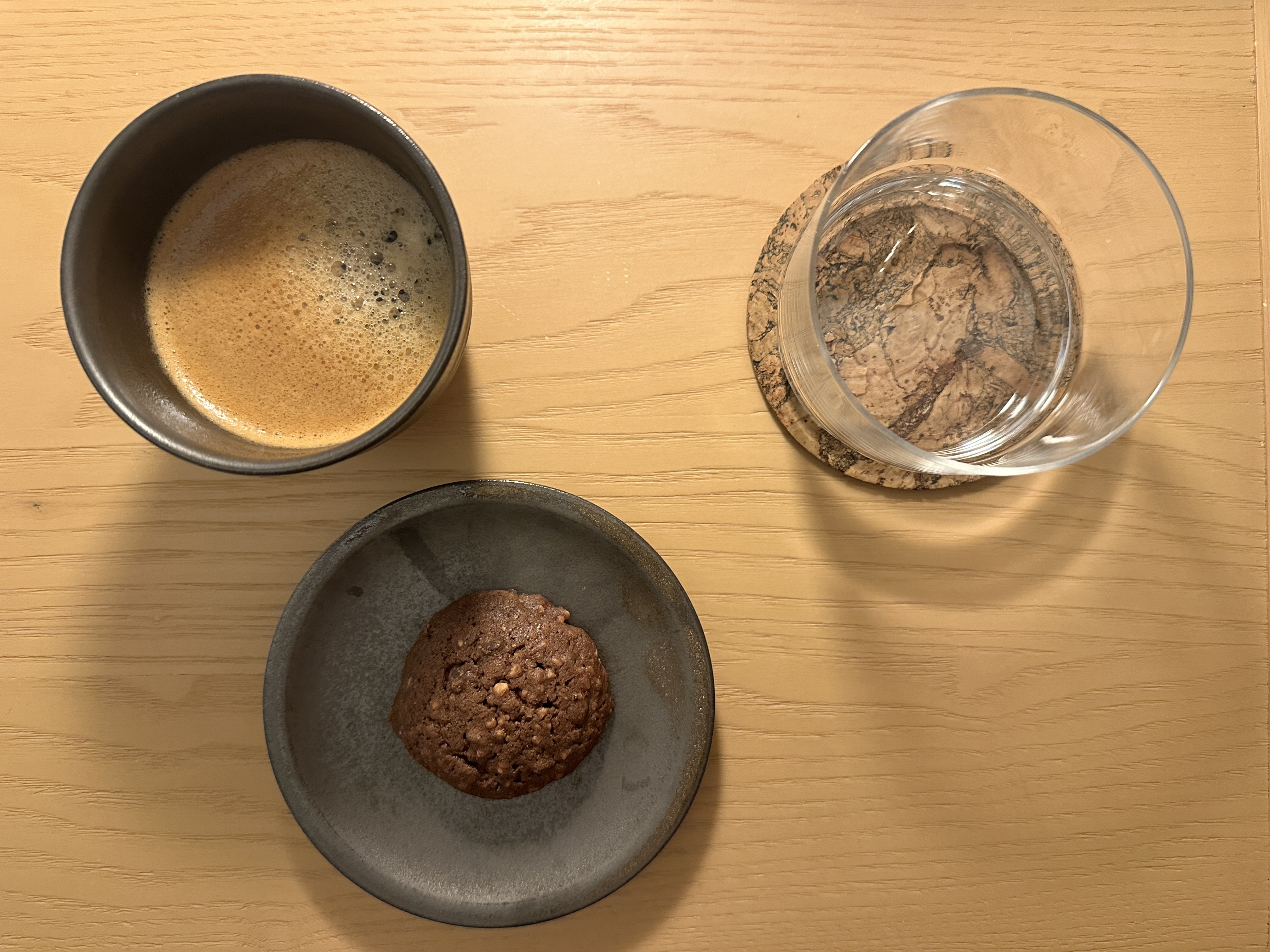
The coffee and sensha pepper chocolate chip cookie.
At first, I didn’t know what to make of this hotel.
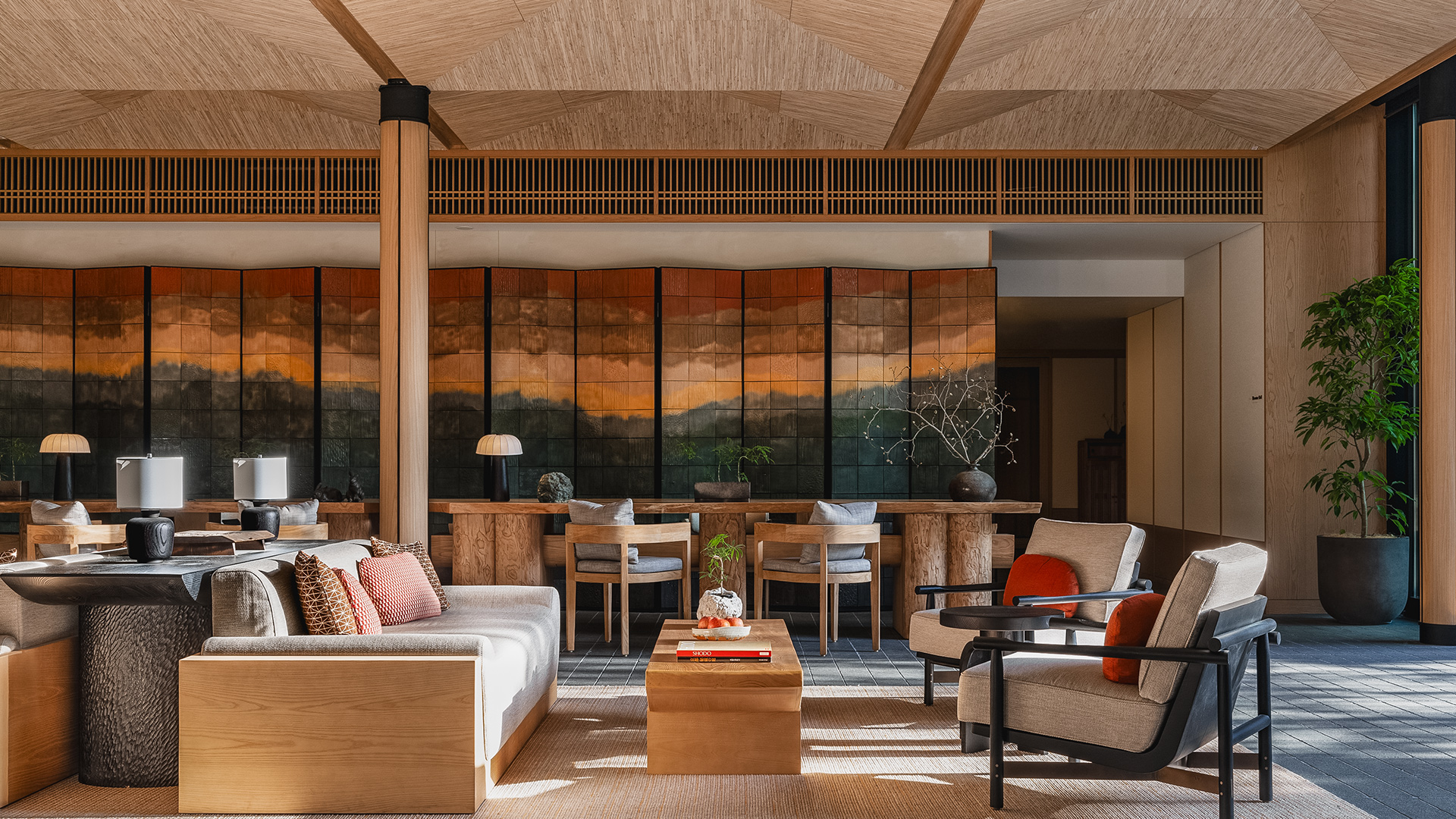
We’d just come from Gion; all wooden machiya houses, narrow alleys, geishas in silk kimonos. Traditional Kyoto. Prior to arriving here, we spent the night at a traditional Ryokan. That was the Kyoto I’d been picturing for months. So when we walked into Six Senses and I saw floor-to-ceiling windows, sleek modern furniture, and contemporary art behind the concierge desk, I felt confused. Almost disappointed.
It was too modern. Too polished. Too “I could be anywhere.”
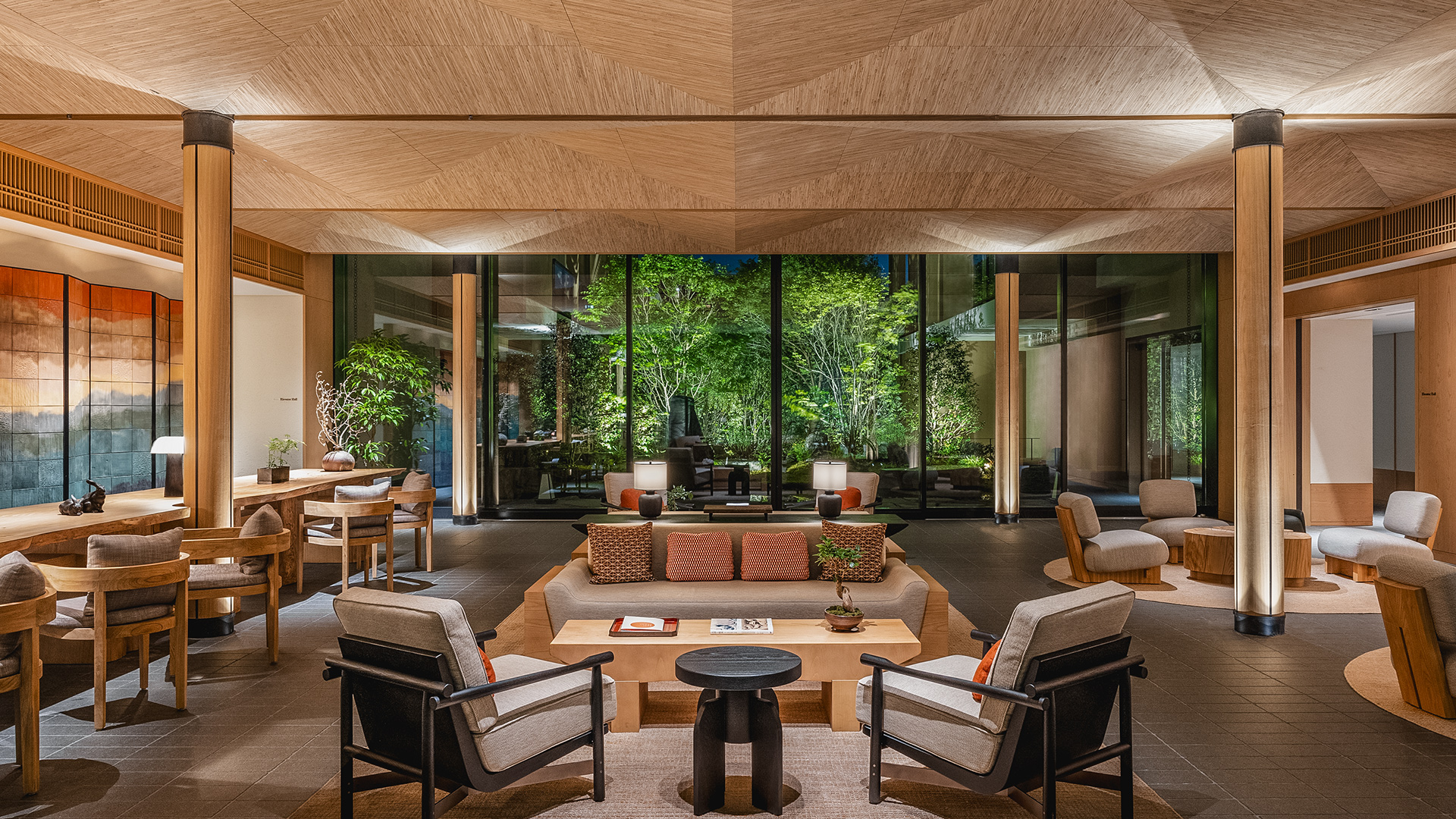
But then I smelled it. That scent. It was warm, grounding, almost impossible to describe. Like hinoki wood but earthier and a soft touch of spice, perhaps? The kind of smell that makes you slow down before you realize you’re doing it. I took a breath. Then another.
We were guided to sit in these beautiful chairs that subtly and tastefully reminded me of the Japanese flag. They checked us in and welcomed us with smoky tea with jelly treats. As part of the check-in ritual to honor Kyoto, they placed a tiny scoop of incense in our hands for us to smell and rub in between our palms. That’s when I started noticing the details.
The initial blooms of cherry blossoms in the massive vase by the entrance. Real, not fake. We were there in early March, right before sakura season really began, and seeing them made me smile. It felt like a gift.
As I looked around, I noticed the pottery! Every cup, every plate, every piece looked like it had been made by hand. Because it had been. The garden views through those floor-to-ceiling windows were so elegant and peaceful. Layered, intentional, quiet.
I didn’t fully understand it yet. But something was starting to shift.
And then they handed us our room key…
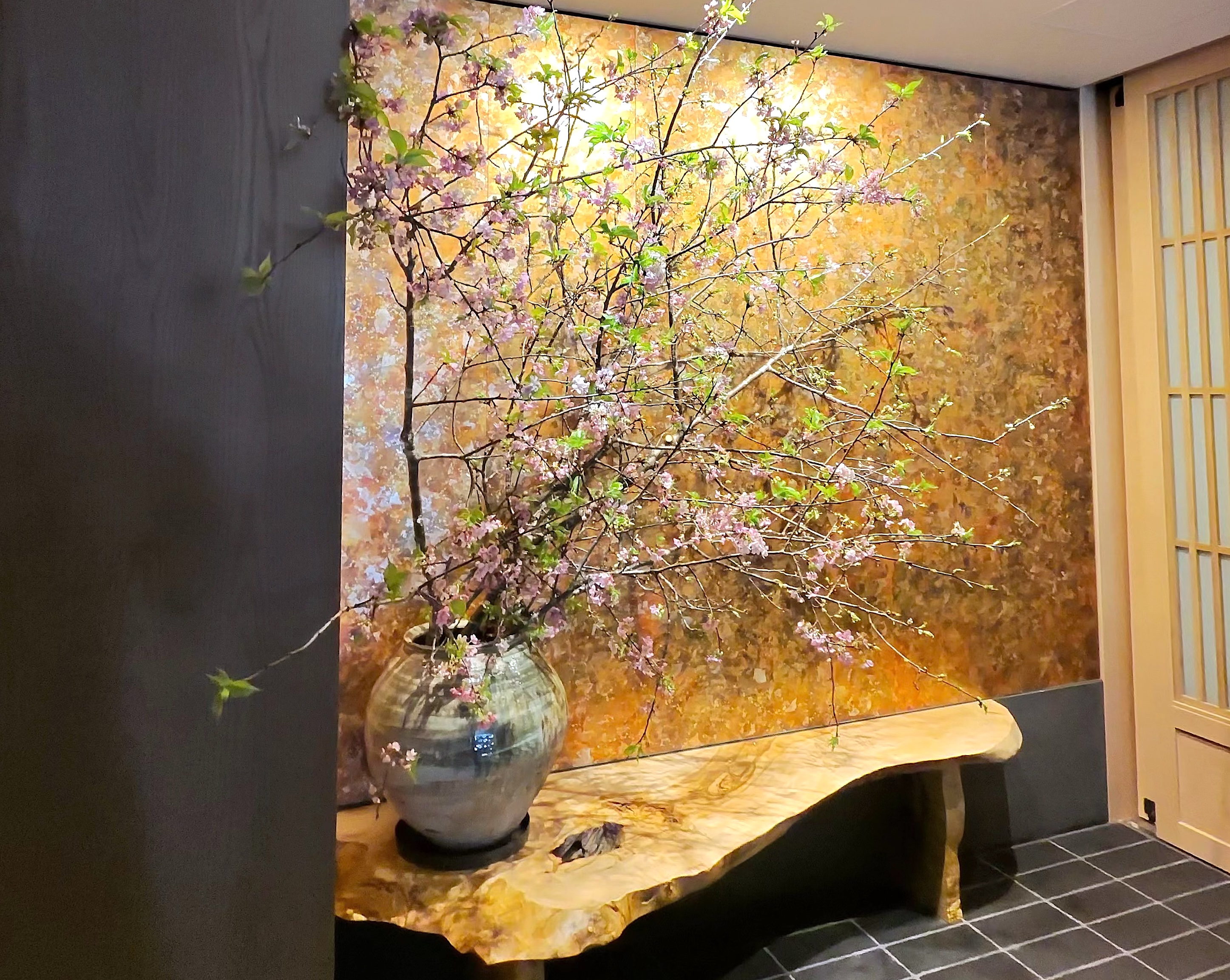
The massive display of early sakura in bloom.
The Room
The room key was a wooden fob, smooth and aligned with the elemental theme throughout the hotel. They walked us down this long corridor with tatami-inspired rug flooring, explaining the complimentary workshops, the spa hours, and where to find breakfast. Everything felt calm and unhurried.
When we opened the door to our Deluxe Garden King room, the first thing I noticed was the space. Two closets. Two vanities, separate, not side-by-side. A room for the toilet, a room for the shower and tub, and a bedroom with a balcony overlooking the garden.
I loved that! My space, his space. Together, but not on top of each other.
On the table was a spread of welcome amenities that put an ear to ear smile on my face. There was yuzu cake, a plate of melons, strawberries, mandarins, a box with matcha cubes, fruits jelly candy, wasambon walnuts, black sesame financiers (which were bomb, by the way). And two notes: one card signed by what looked like half the hotel staff, and a personal letter from Nico, the hotel manager.
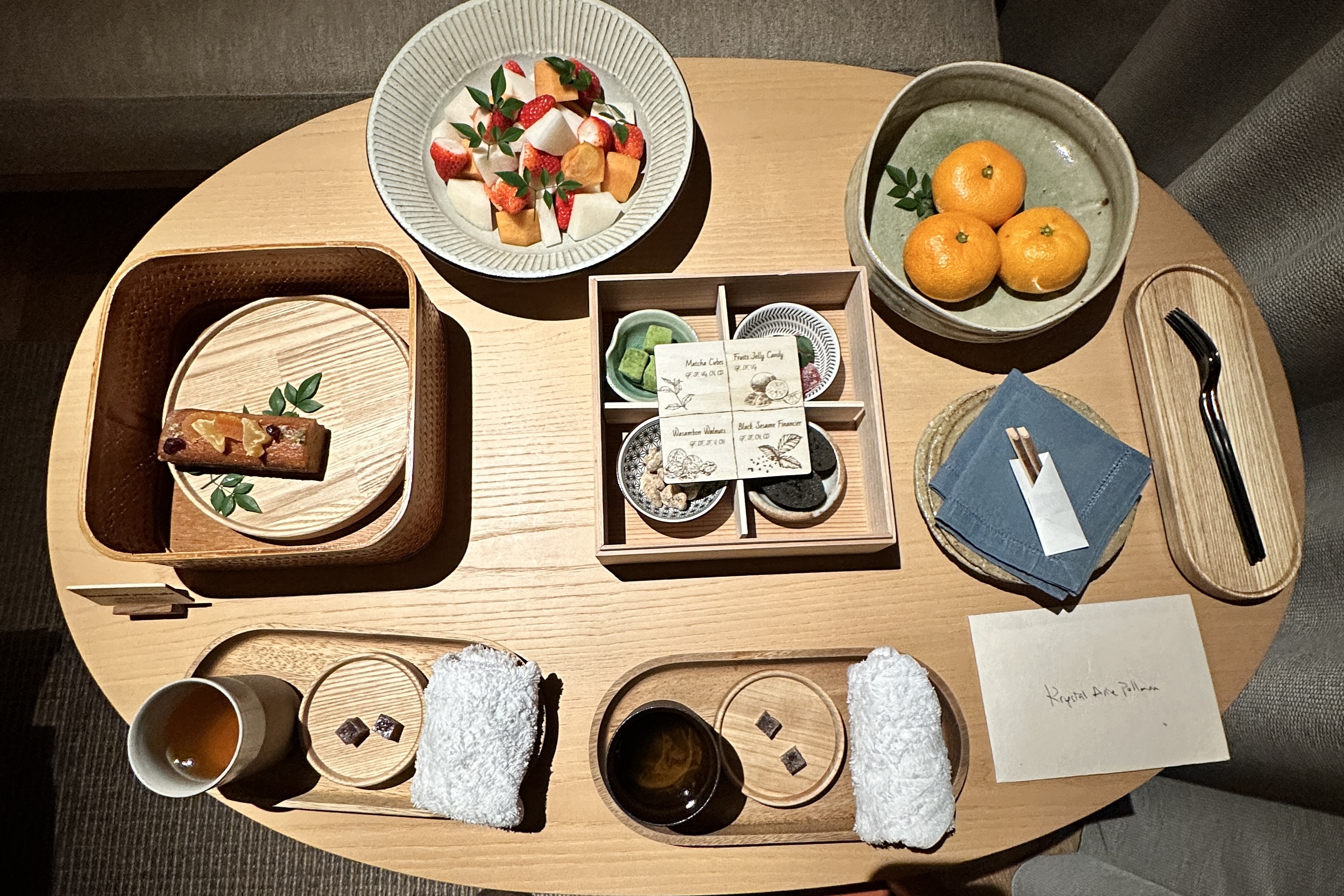
Our generous spread of welcome treats.
As I stood there reading it, I felt this deep sense of gratitude for all of them.
Then, I went to the closet to start putting my things away and noticed the slippers; brown, earthy, made of this soft felt material. Out of the 10 different hotels we stayed at throughout our journey, these were my favorite. I’m wearing them right now as I write this. Yes, I took them. Zero shame.
The minibar was stocked with coffee, tea, in-house treats like popcorn, veggie chips, cookies. Inside the fridge, there was flavored water, sparkling water, sake, beer; everything (aside from the alcohol) was complimentary and replenished daily. It was the kind of thoughtful curation that makes you want to try everything. And you better believe we did!
And let me talk about the water for a second, because this is something that matters when you’re traveling. Some hotels give you two tiny bottles and call it a day. Some give you nothing and you have to constantly be asking for it. Six Senses Kyoto was the water that kept on giving.
They fill their own glass bottles, so you’re not creating a pile of plastic trash. There was a glass bottle on each vanity. A glass bottle on each bedside table. Water in the fridge. Water by the coffee machine. They brought water with room service. Everywhere you turned, there was water.
I drink a lot of water. I like to stay hydrated. And I’ve noticed when I travel, it can be challenging to maintain the same level of hydration I do at home. So this touch? I really appreciated it. It’s one of those details you don’t think about until you’re in a hotel where water feels scarce, and then you remember the places that got it right.
The lighting system took me a minute to figure out. You could light just the toilet room. Just the tub. The shower. The hallway. You could dim it down to mood lighting behind the bed, or go full brightness. At first I thought it was overkill but when I decided to indulge in a bath that second night, I got it.
Let’s talk about the bed. The sheets were decadent, the mattress was firm but giving, and the pillows felt like soft yet supporting clouds. They have a sleep program here—aromatherapy, a pillow menu for turndown service—but we were so exhausted that first night, we skipped it all. We just wanted room service and sleep.
We ordered the burger and the fish of the day. The fish came with grilled cauliflower, beets, leafy greens, actual vegetables, cruciferous vegetables! I didn’t realize how much I’d missed them until I was sitting there eating grilled cauliflower like it was the best thing I’d tasted all week.
Most of the vegetables we’d eaten in Japan had been pickled. Which is fine. But there’s something about roughage. Fiber, you know? Your body needs it. And after days of mostly protein and carbs, I was genuinely happy to see vegetables on my plate.
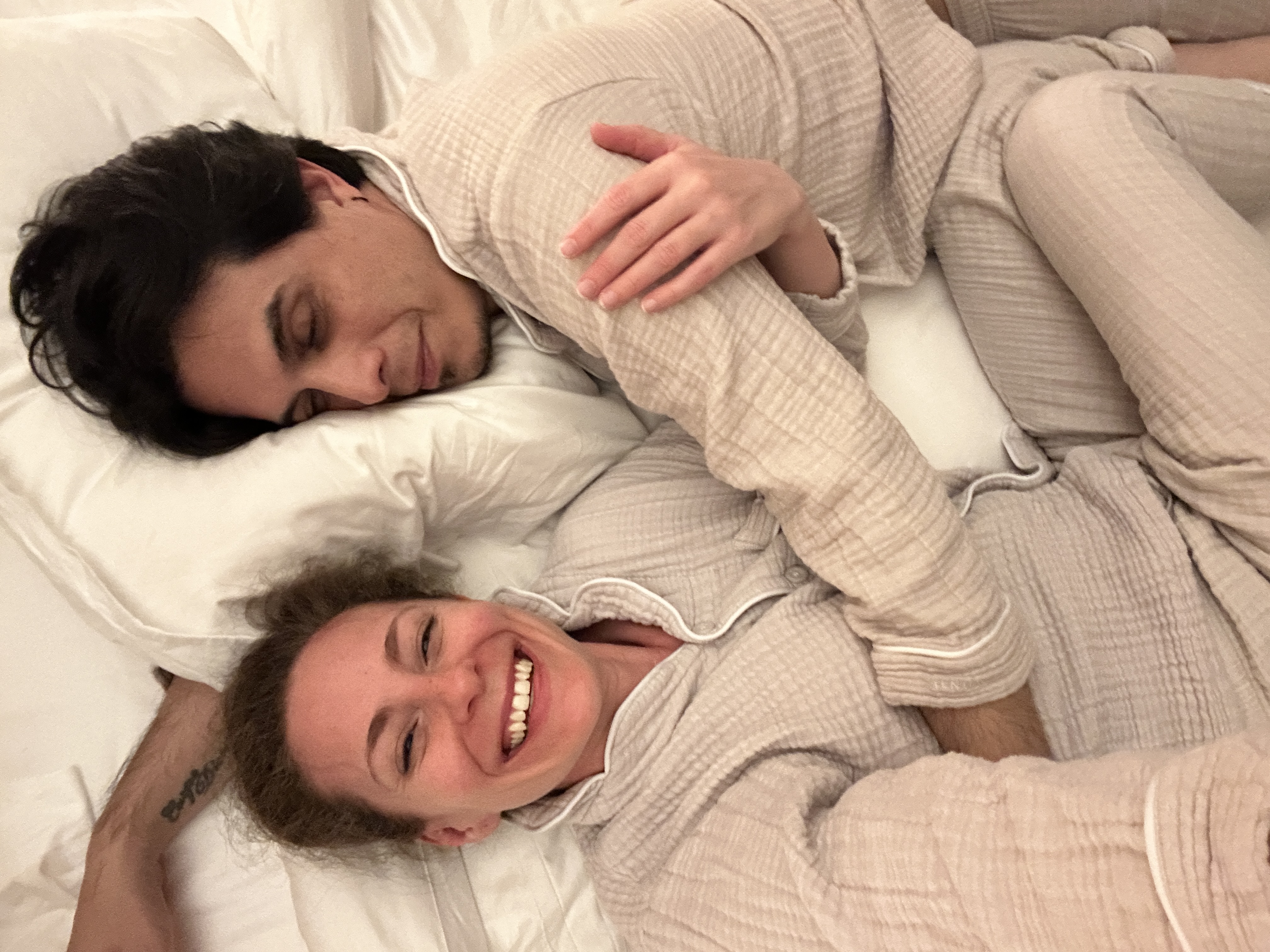
After we ate, we showered, completed our nighttime ritual, put on the scrumptious Six Senses pajamas, and got into bed. We fell right to sleep after lowering the blackout shades and slept better than we had in months.
The First Breakfast
Breakfast the next morning is the reason I didn’t want to leave this hotel.
If I could only eat at one place for the rest of my life, it would be the breakfast at Six Senses Kyoto.
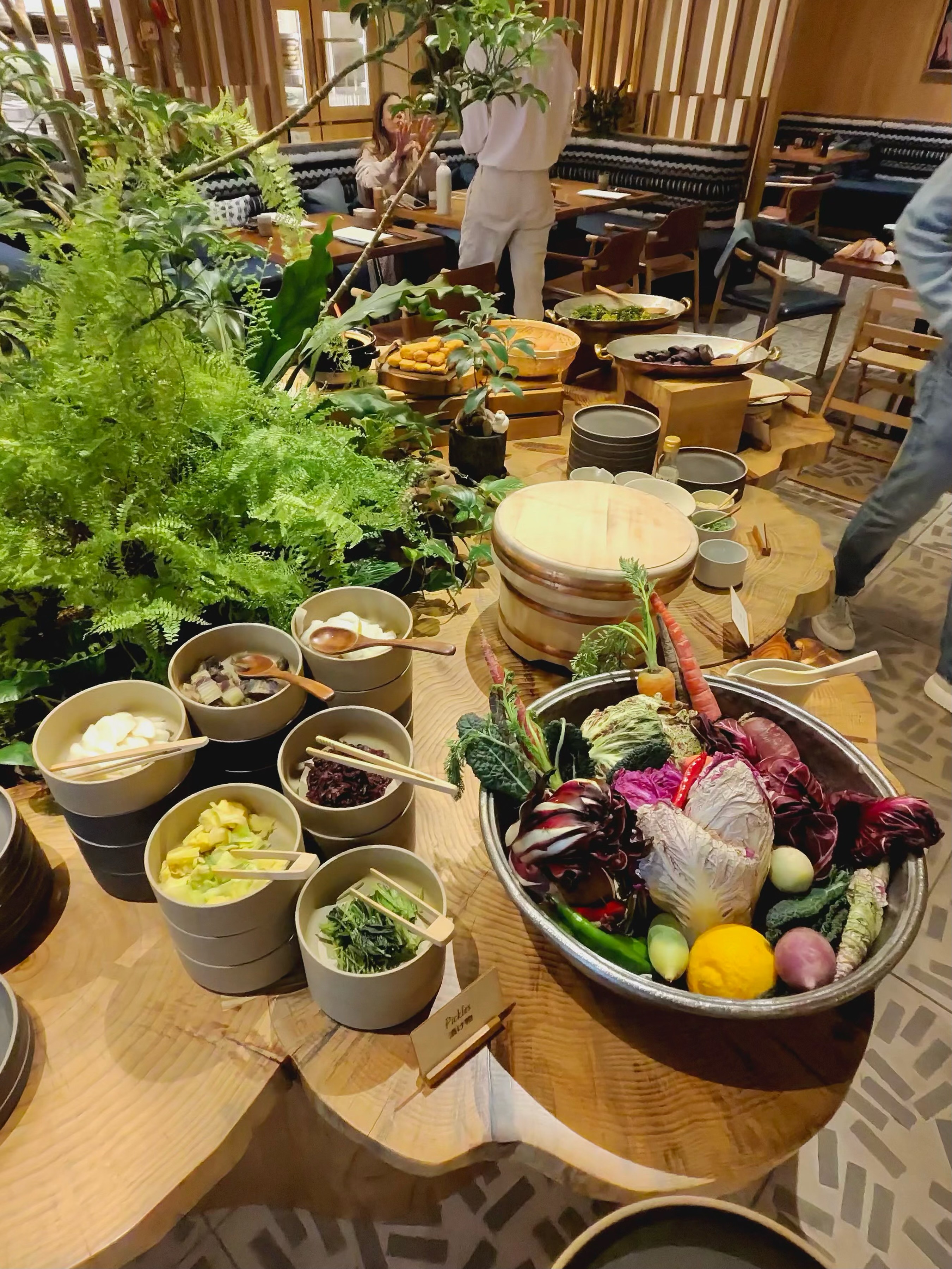
There’s a full buffet and also a menu where you can choose two items per person. I got up and walked around while my eyes delighted in the colorful spread of fruits, vegetables, greens, tofu, chicken, juices, breads, yogurt, condiments, and anything you could think of. The ginger shot here is good stuff but it’s intense. Don’t say I didn’t warn you. I lost it over this rice flour bread with matcha butter. It’s that eye-crossing, toe curling kind of good. I also really enjoyed the carrot shot and the matcha azuki buns.
Hotel food is usually indulgent. Rich, heavy, something you eat for a few days on vacation but not necessarily sustainable for long-term. This was different. Everything was light, organic, and local. I felt like I could eat without getting full or bloated.
Everything here works in microseasons; they call it sekki, the traditional Japanese solar terms that divide the year into 24 periods.1 The menu changes every two weeks based on what’s growing, what’s in season, what the land is giving right now.2
I highly recommend the Japanese breakfast the chicken sausages, and the french toast.
I looked at Israel mid-bite and said, “Even if you’re not staying here, you’ve got to try the breakfast.”
He nodded. Mouth full. Same page.
After breakfast we took a walk and explored the garden a bit. It was relaxing and great for digestion.
The Moment It Clicked
Later that day, I was on a site tour with Bianca, one of the Guest Experience Makers, when I finally brought up what had been bothering me since we arrived.
“It doesn’t feel like Kyoto,” I said. “It’s beautiful, but it feels modern. International. I was expecting something more traditional.”
She smiled. Not defensive. Just understanding.
“A lot of the designers and artists we work with are Japanese,” she said, “but they’ve spent time abroad and come back with this fusion. Japanese with a twist.”
And just like that, it all made sense.
I started seeing the Japanese influence everywhere. The pottery wasn’t just beautiful; it was ceremonial. The bowls in the bathroom sinks were custom-made matcha bowls. 120 of them, one for each sink in the hotel.3
I mean, come on.
The chairs in the lobby that looked like the Japanese flag. The bronze artwork inspired by Chōjū-jinbutsu-giga, the famous scrolls of frolicking animals from the Heian period. The way the garden was layered to represent the descent from the Higashiyama mountains to the city floor.4
This wasn’t “I could be anywhere.” This was deeply, intentionally Kyoto; just not the Kyoto tourists expect.
I told Akari, who works in the spa, that this place felt futuristic but mindful. Like those peaceful villages you see in Star Trek where everything is beautiful, purposeful, and there’s no “country” or “individual,” just “all of us, united.”
She laughed. But she got it.
This is the hotel where I saw the greatest mix of people from everywhere. Japanese, Chinese, Spanish, German, American, Mexican. The staff, though, was predominantly local—hired from Kyoto and the surrounding region. That balance felt important. A hotel that welcomes the world while remaining rooted in its community. And all the guests seemed to be having the same realization I was: this place is for people who can appreciate intention.
The Spa
That evening, I finally made it down to the spa. And it was everything I wanted and didn’t know I needed.
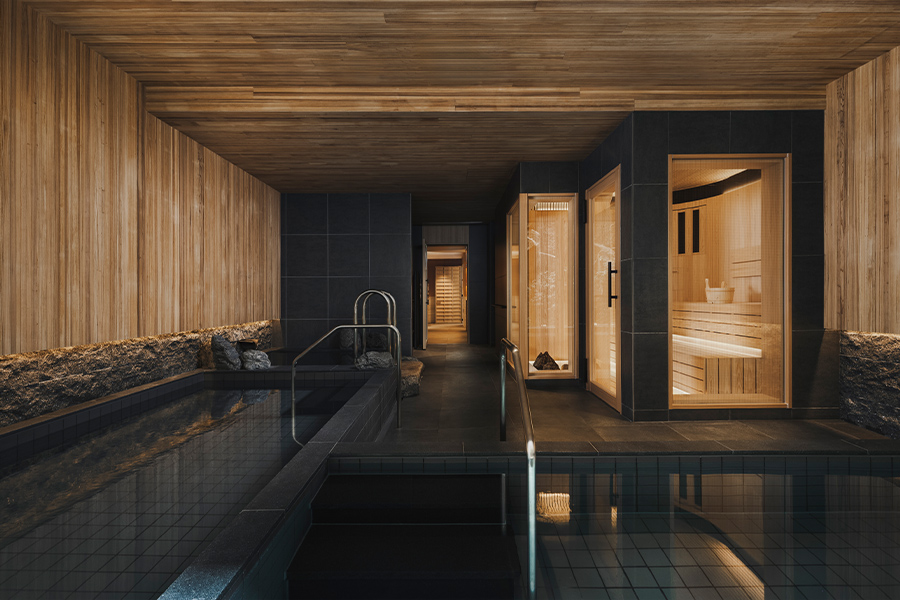
Of the 9 spas we visited, this one was my favorite. Not because it was the biggest or the fanciest, but because it had everything: the modern biohacking equipment (compression boots, red light masks, hypoxic training) and the traditional onsen-style ofuro bathing (showers, hot baths, warm bath, cold plunge, sauna, steam room).56
And the view. You’re looking out a window at a beautiful rock formation set in green grass with sounds of water dripping in between deep inhales and exhales, feeling your body slow down in real time.
I had the place to myself that evening and you better believe I tried it all and yes, in my birthday suit. That’s how it’s traditionally done in Japanese onsen or ofuro. You go in naked. Six Senses was the one place where they did allow you to go in a bathing suit if you wanted to but come on, you’re in Japan! Do as the Japanese do.
I walked out of there feeling like a brand new person. Not just relaxed but revitalized.
This is what I kept feeling the entire time we were here: I feel so good. I feel so well.
That’s Six Senses’ whole thing; wellness. But not in that performative, Instagram-wellness way. In the “we care about your body and nervous system” way.
Which is exactly what I needed on our second night.
The Second Night
Here’s the honest part.
By the second night, we were exhausted. We’d spent the day exploring the city, walking through temples, getting lost in narrow alleys, and by the time we got back to the hotel, the thought of getting dressed and going back out for dinner felt impossible.
So we ordered room service. Again. I know, so boring.
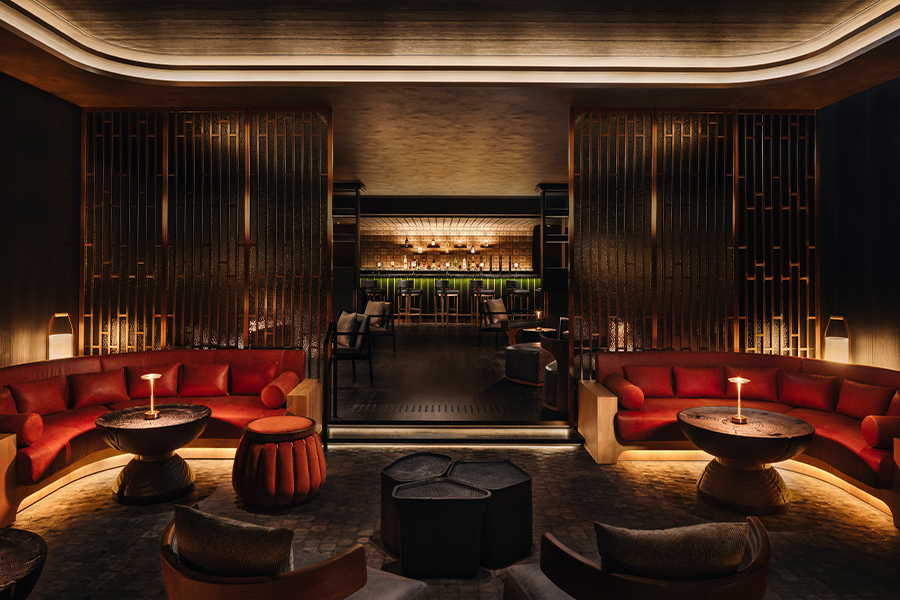
But here’s the thing: I really wanted to make it down to Nine Tails, the speakeasy bar. I’d toured it with Bianca earlier that day and was genuinely excited about it. The atmosphere, the cocktails, the whole vibe. And it’s open to the public, so you don’t even need to stay at the hotel to visit.
But exhaustion won.
I wasn’t upset about it though, because I’d already spent time in the spa that evening. And the spa? That’s where I come alive. That’s my non-negotiable.
So while I missed Nine Tails, I didn’t miss what mattered most to me. And honestly, that felt like the hotel working the way it was supposed to: giving me permission to choose rest over obligation.
The Reveal
During that tour with Bianca, she showed me the Premier Garden Suite. And that’s when I fully understood what Six Senses Kyoto is.
You get your own garden. Not a view of a garden. Your. Own. Garden.
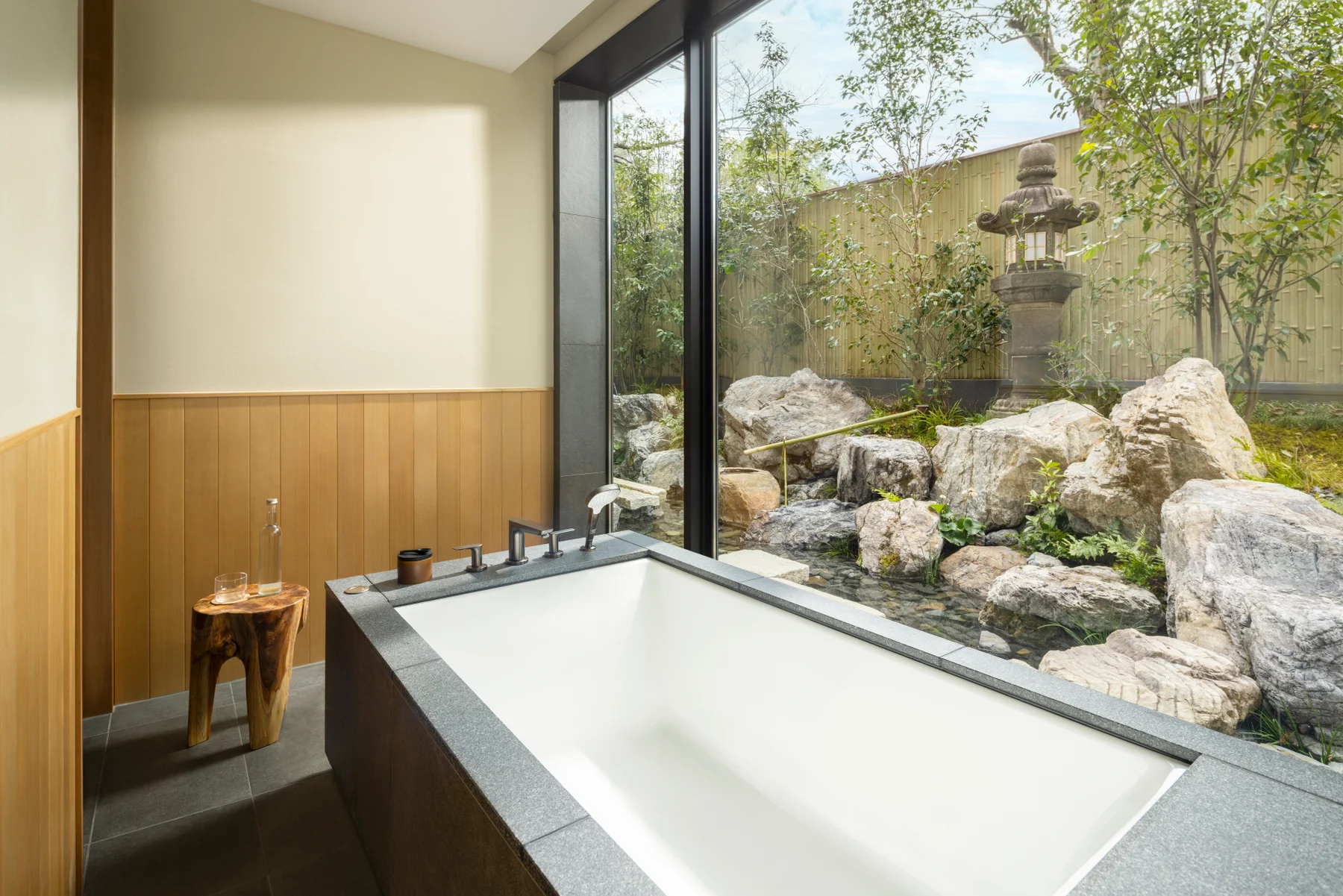
The living room looks onto it. The bedroom looks onto it. The shower looks onto it. And the bathtub, positioned like a centerpiece, faces it directly. Bianca told me the garden explodes with sakura in spring. This is the suite for honeymooners, anniversaries, people who want seclusion and romance.
I stood there looking at that tub, imagining what it would feel like to soak in it while cherry blossoms fell outside, and I thought: This is who this place is for.
People who’ve been moving too fast for too long. People who don’t even realize they’re tired until someone gives them permission to stop.
At first, I thought this hotel was only for people who’d been to Japan multiple times. People who’d already “done” the temples and the kaiseki and the traditional ryokans and were ready for something different.
But now I think it’s for anyone who wants depth over frills. Anyone who’s willing to look closer and notice the intention behind every single detail.
The custom pottery. The microseasons. The lighting that adjusts to your circadian rhythm.7 The daruma they gave us at checkout; a traditional goal-setting talisman where you fill in one eye when you set a goal, and the other when you complete it.
This place doesn’t feel like a hotel. It feels like home.
⭐⭐⭐ Essential. Not because it’s perfect (it’s not), but because it does one thing better than anywhere else I stayed in Japan: it gives you your time back.
Who It’s For
This hotel is for:
- Couples who want seclusion and romance (that Premier Garden Suite is unreal)
- Wellness-focused travelers who care about what they eat, how they sleep, and how they recover
- Health foodies who don’t want to sacrifice their diet while traveling (everything is organic, local, light, and designed to make you feel good)
- People who appreciate modern Japanese fusion
- Athletes and families (they have biohacking equipment, a kids program, and babysitting so parents can escape to the spa or Nine Tails bar)
- Anyone who’s been moving too fast and needs permission to stop
This hotel is NOT for:
- People seeking “traditional Japan” (tatami mats, kaiseki in your room, full ryokan immersion; this isn’t it)
- Budget-conscious travelers (rooms start around $550–$600 in low season and can exceed $2,500 during peak periods)
- Anyone who wants to be in the thick of Gion’s energy (this is a sanctuary, not a TikTok)
When to Go & Pricing
Best times:
- Late November for autumn foliage (the micro-seasonal menu features mushrooms, chestnuts, and root vegetables at their peak)
- January–February for the lowest rates and fewer crowds
- May–June after Golden Week but before summer heat (the gardens are lush and rates are moderate)
Avoid:
- Late March–Early April (cherry blossom season is beautiful but chaotic and I prefer umé over sakura. There, I said it.)
- Golden Week (late April–early May) and August (Obon crowds and humidity)
Pricing: Rooms start around $550–$600 in low season. Peak periods can exceed $2,500. Book 3–6 months ahead for high season.
How long to stay: We stayed two nights, and while that was a great taste of what Six Senses Kyoto offers, I recommend at least four nights so you have time to experience it all without feeling rushed. The spa alone deserves multiple visits, the breakfast is something you’ll want every morning, and the property has a way of slowing you down that you don’t fully appreciate until day three.
How to Book
If Six Senses Kyoto sounds like your kind of place, I can help you book it and make sure you get the experience I had, not the standard one.
When you book through me as a Forbes Travel Guide Endorsed Agency with IHG Destined and Six Senses preferred partnerships, you’ll get:
- Complimentary daily breakfast for two (valued at ¥7,000 per person)
- Room upgrades when available at check-in
- $100 USD spa or resort credit
- Early check-in and late checkout (subject to availability)
- VIP welcome amenities
I work with IHG Destined, Four Seasons Preferred Partner, Rosewood Elite, Hyatt Privé, Belmond Bellini Club, The Peninsula PenClub, and Mandarin Oriental Fan Club programs. Whether Six Senses Kyoto is part of a larger Japan itinerary or a standalone wellness retreat, I’ll make sure every detail is handled.
Ready to book? Contact me directly, and I’ll take care of the rest.
What You Need to Know
Location: 431 Myohoin Maekawacho, Higashiyama Ward, Kyoto8
- 10-minute walk to Kyoto National Museum, Sanjusangen-do Temple, Toyokuni Shrine
- 20-minute walk (or 5-minute taxi) to Gion
- 7-minute taxi from Kyoto Station (about ¥1,500)9
- Back door that leads directly to a temple (yes, really)
Getting There:
- Kansai International Airport (KIX): 1.25 hours via Haruka Express or private car9
- Osaka Itami Airport (ITM): 1 hour by private transfer10
What It Has:
- 81 rooms and suites (ranging from 42 to 238 square meters)3
- The best hotel breakfast I’ve had in Japan (seriously, even if you don’t stay here, reserve a table)
- A 2,000-square-meter spa with biohacking equipment, Watsu pool, hot baths, cold plunge, three saunas5
- Sekki restaurant (micro-seasonal dining that changes every two weeks)1
- Sushi Oga (intimate sushi counter with red vinegar sushi rice)10
- Nine Tails Bar (cocktails infused with local botanicals)11
- Smart room technology with circadian lighting7
- 120 custom-made ceremonial matcha bowl sinks3
- Complimentary workshops (incense pouch-making, cultural experiences)12
- Kids program and babysitting
What It Doesn’t Have:
- Traditional ryokan atmosphere (this is modern Japanese fusion)
- Views of iconic Kyoto landmarks from every room (many face the interior courtyard for privacy)
- Budget-friendly pricing
Pro Tips:
- Even if you don’t stay here, reserve breakfast. It’s that good.
- Ask about the Premier Garden Suite if you’re celebrating something special.
- The spa has biohacking equipment you won’t find elsewhere in Kyoto.
- If you see the yukata in the spa gift shop, buy it. (I didn’t, and I regret it.)
This place holds a special place in my heart. Winning the stay at Six Senses was the catalyst for a trip that changed everything. I promised I’d write one heck of a good article about this place and make sure the world reads it.
Well, here we are.
-
Dining in Kyoto: Restaurants, Cafes, & Bars at Six Senses, https://www.sixsenses.com/en/hotels-resorts/asia-the-pacific/japan/kyoto/dining/ ↩ ↩2
-
Sekki Seasonal Dining in Japan | Six Senses Kyoto, https://www.sixsenses.com/en/corporate/news/sekki-seasonal-dining/ ↩
-
Six Senses Kyoto Opening April 2024, https://www.sixsenses.com/en/corporate/media-center/press-releases/2024/kyoto-open-now/ ↩ ↩2 ↩3
-
シックスセンシズ 京都 – SIX SENSES KYOTO « PLACEMEDIA, Landscape Architects Collaborative., http://placemedia.net/works/2665/?lang=en ↩
-
Six Senses Kyoto Opening April 2024, https://www.sixsenses.com/en/corporate/media-center/press-releases/2024/kyoto-opening-date-announcement/ ↩ ↩2
-
What Is Biohacking? Spa Techniques to Boost Your Well-Being - Six Senses, https://www.sixsenses.com/en/wellness-spa/stories/hack-your-holiday/ ↩
-
Environmentally Friendly Hotels & Resorts: Six Senses, https://www.sixsenses.com/en/sustainability/environment/ ↩ ↩2
-
Six Senses Kyoto | Accommodations | JAPAN. WHERE LUXURY COMES TO LIFE, https://www.japan.travel/en/luxury/detail/six-senses-kyoto/ ↩
-
How to Get to Kyoto, Japan - Six Senses, https://www.sixsenses.com/en/hotels-resorts/asia-the-pacific/japan/kyoto/destination/how-to-get-there/ ↩ ↩2
-
Stay at Six Senses Kyoto, Kyoto | Room Details & Prices 2026 | Luxury-hotels.com, https://sixsenseskyoto.luxury-hotels.com/ ↩ ↩2
-
Six Senses Kyoto, Japan, https://pub-mediabox-storage.rxweb-prd.com/exhibitor/document/exh-54525ead-63c7-4907-96e4-ea5f49f2cd4b/b307a15e-f2b3-45ad-8809-cfee63af9dc6.pdf ↩
-
Incense Pouch Workshop in Kyoto | How to Make Nioi Bukuro - Six Senses, https://www.sixsenses.com/en/hotels-resorts/asia-the-pacific/japan/kyoto/experiences/incense-pouch-workshop/ ↩